Collective resistance has repeatedly proven to be the great equalizer in history. Time and time again, humanity has seen malevolent forces rise up, carry out unimaginable atrocities, and destabilize entire regions or continents. Rooted in fanatical ideology and driven by bombastic dictators, such colossal instruments of terror emit an aura of invincibility—and understandably so. History rarely favors the perceived right or morally righteous party. Might has traditionally defined right, swinging its indisputable axe until the axe breaks, tyrannical control snaps, or once humanity is collectively forced to choose between life and death.
Today’s geopolitical landscape is no different. Senseless wars rage on across vast swaths of the globe while we helplessly watch in sheer horror at the scattered limbs, trembling children, and devastated homes of fellow human beings. One death is heartbreaking. Several, a tragedy. Hundreds, an atrocity. But what do we call the conscious murder of thousands on a regular basis, dismissed as collateral damage?
Few writers are capable of putting the unspeakable into words like Soviet writer and journalist Vasily Grossman. Having witnessed the Eastern Front of WWII firsthand as a war correspondent, Grossman understood both the terrifying scale of mechanized warfare and the often-overlooked role of ordinary individuals caught within it. In his hefty, interconnected novels, Stalingrad and Life and Fate, rather than portraying the war through dictators, grandiose battles, and loose abstractions, he turns his attention toward the common soldier, civilian, and laborer whose collective sacrifice ultimately halted the advance of fascism. His fiction and nonfiction celebrate the inextinguishable power of collective resistance while also exploring the murky ethical burden of individual agency and moral responsibility.
Divide and Conquer
It’s widely understood that the whole is greater than the sum of its parts, a concept captured in the single German word Gestalt. Founded by psychologist Max Wertheimer in the early twentieth century, this theory extends beyond the analysis of human consciousness to both mechanical and abstract systems. A cohesive book conveys more than its isolated chapters. A car becomes immensely more powerful when each component works synergistically with the others. The same applies to the human collective. When human beings gather around a unifying goal, cause, or resistance, the gestalt becomes something beyond the numerical or quantifiable force of its individual parts. Grossman understood this, but so did the Nazis.
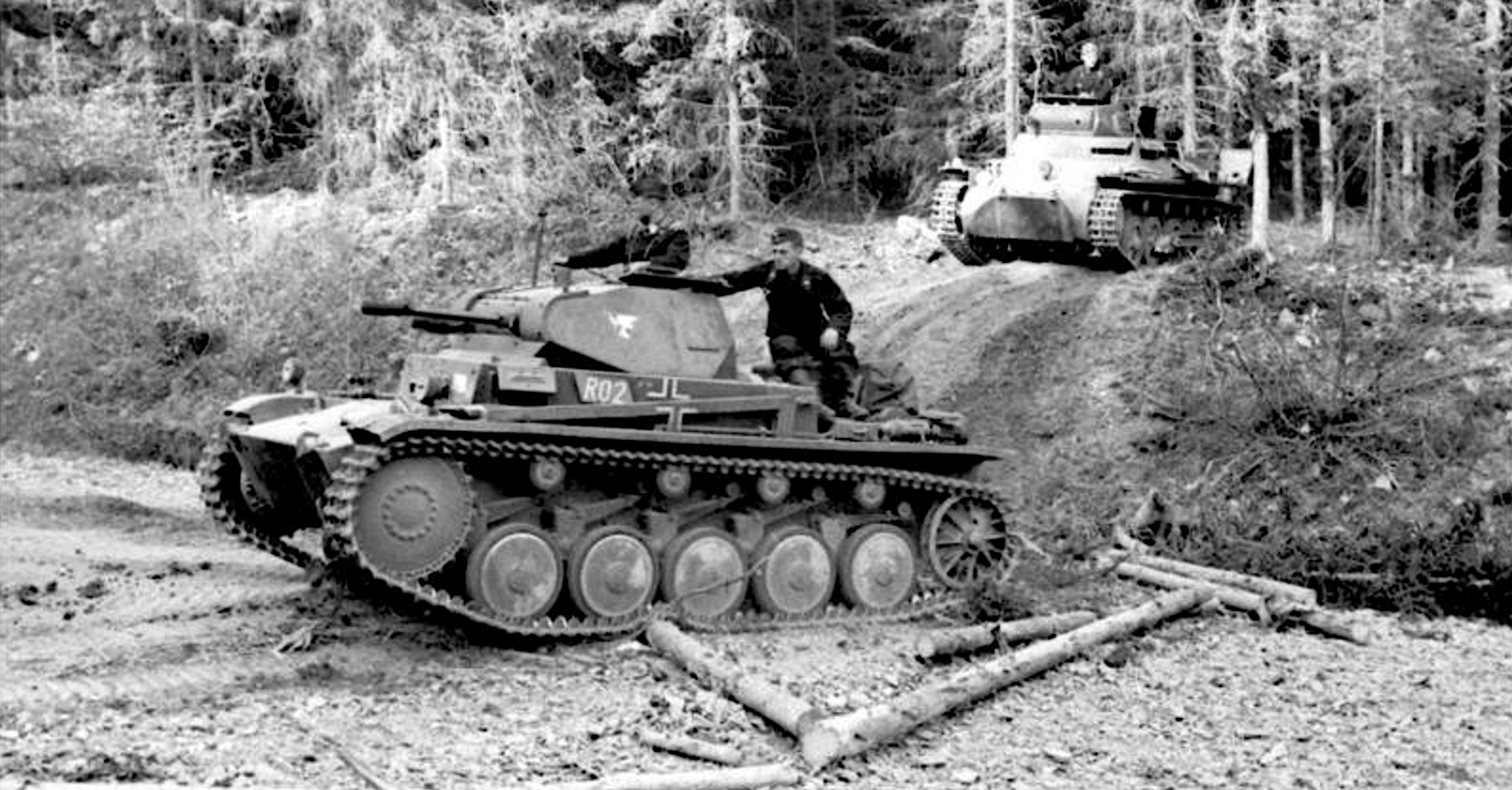
One of the greatest strengths of the Nazis’ military strategy was its ability to overwhelm. The Wehrmacht’s infamous Blitzkrieg—meaning “lightning war”—was a strategy designed to rapidly attack and bewilder the opposition, typically leading to swift victory. This involved fast-moving tanks known as panzers, motorized infantry, and the Luftwaffe working together to quickly crush and encircle enemies before they had a chance to mobilize their own forces. It was foundational to Nazi Germany’s success, particularly in the early years of the war. In Stalingrad, Grossman captures the disorientation experienced by soldiers dispersed along the Eastern Front. These forceful attacks not only achieved physical advancement, but also stripped individual soldiers of their awareness of their connection to the whole and their strength in unity.
“And this was indeed the aim of the barrage—to plunge each individual into his own solitude. Relentless thunder would prevent a soldier from hearing the words of his commissar; smoke would make him unable to see his commander; the soldier would feel isolated from his comrades, and in this awful isolation he would be conscious only of his own weakness.” — Stalingrad, Vasily Grossman
Blitzkriegs triggered panic, which further isolated individuals and weakened Soviet forces overall, but the terror sent shockwaves far beyond the combat zones. Throughout various chapters, Grossman immerses readers in the dilemma of innate self-preservation within POW camps, bomb shelters, and shelled cities. Pivoting between disquieting war scenes and heavy-hearted familial exchanges, he draws readers into the lives of ordinary Soviet citizens fleeing apartments now reduced to rubble, while fellow comrades sob over their lost belongings and struggle to secure passage to safer regions. It is helter-skelter for civilians as much as it is for soldiers, and for both, unity and mutual compassion become their saving grace.
In Part 3 of Stalingrad, the collective-farm worker turned soldier, Pyotr Vavilov, stares out at the mounds of rubble, scintillating shards of glass, and corrugated steel scattered across the city of Stalingrad. He involuntarily states, “This is Hitler,” as his emotions swell with both horror and a sense of unity with his fellow countrymen:
“Those who say that the people worship strength must differentiate between different kinds of strength. There is a strength that the people respect and admire, and there is a strength that the people will never respect, before which it will never abase itself.” — Stalingrad, Vasily Grossman
An indomitable strength emerges from the collective will of the people, but this unification must also be balanced with a recognition of one’s personal responsibility and the role of individual choice. Grossman’s ability to articulate this dynamic between the individual and the collective is where his works achieve unparalleled heights.
Responsibility to Self and Society
Grieving the death of his own mother, who fell victim to the Nazis in 1941, Grossman fearlessly volunteered for his post in the war effort and, in his reports, faithfully rendered the sensations—no matter how appalling—of the greatest war the world has known. As a war correspondent for the official military newspaper Krasnaya Zvezda (Красная звезда, “Red Star”), Grossman covered several major battles along the Eastern Front while also gathering countless eyewitness accounts of the unspeakable horrors of the war. His reporting on the Treblinka extermination camp was among the first to expose the unutterable horrors of the Nazi death camps.
In Stalingrad, Grossman largely spares us the graphic murders that he both witnessed and recounted in his reports, yet the novel nevertheless retains a series of gruesome events that interrogate the moral calculus of such unabated violence. Approaching the front line for the first time, Nikolai Krymov is appalled by the routine brutality:
“One image troubled him day and night—the sight of the spattered blood and scraps of women’s clothing on the front of a German tank. How, he kept asking, could this have happened? The driver, after all, was an ordinary soldier. No one had been giving him orders nobody had been standing over him when, on the fringes of the Priluki forest, he had turned his tank against defenceless women and children.” — Stalingrad, Vasily Grossman
Repeatedly, Grossman turns our attention to the role of the everyman. In such a hellscape, where daily death tallies unfailingly begin with four digits, the impact of the ordinary citizen is often washed out. History forgets such individuals, however outcomes are defined by them. The Battle of Stalingrad saw roughly 1.1–1.3 million Soviet casualties, yet their names are lost, forgotten, buried alongside their war-torn bodies beneath the blood-soaked earth. Grossman acknowledges this fate of the common soldier, stating:
“There were men ready to march forward to their death even when vast spaces lay free and empty behind them; and there were men who, recognizing they were hopelessly outnumbered, fought only the more fiercely. These are the heroes of the first period of the war. Many are nameless and received no burial. It is to them, in large part, that Russia owes her salvation.” — Stalingrad, Vasily Grossman
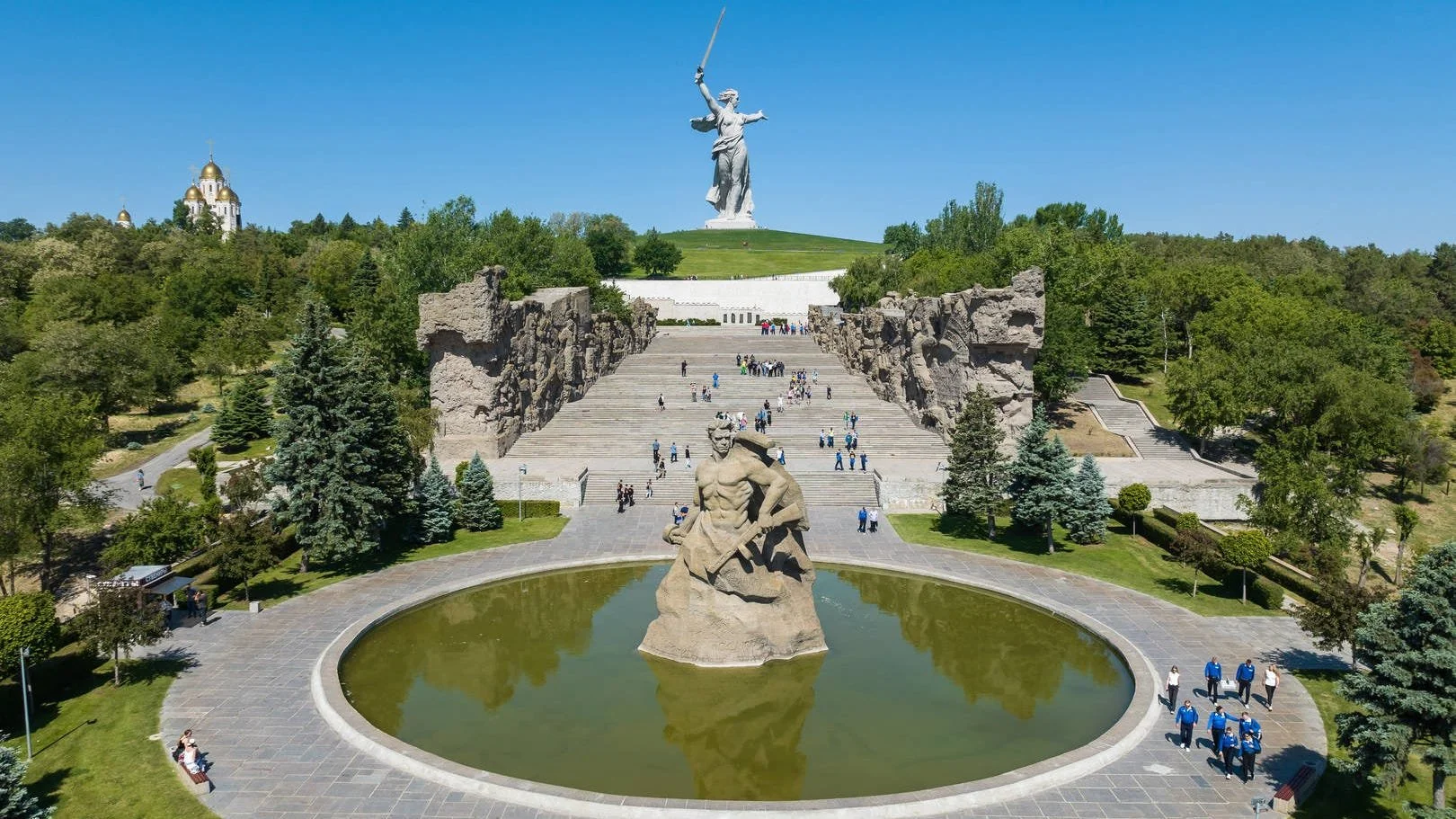
Their names live on only through constructed memorials and in the memories of their loved ones, assuming they survived the war. The household names belong instead to Georgy Zhukov and the high-ranking officials who oversaw command. After all, we cannot preserve the memory of the innumerable victims of war; nevertheless, it was their collectively spilled blood that broke the dam of fascism and must not be devalued. Grossman honored not only the sacrifice of the everyman, but also his ability to overcome adversity and reveal his character in unpredictable ways. Throughout his narrative, he highlights how these “seemingly untalented men, whom nobody noticed, revealed a wonderful strength.”
Under this framework, Grossman lets no one off the hook. No man or woman is free to shirk their moral responsibility or excuse themselves on the grounds of fear, following orders, or the chaos of war. Hitler’s Nazis preyed not only on hatred and delusions of racial supremacy, but also on complicity. This took the shape of sycophants, willing participants, and silent bystanders prepared to discard any previously held moral conventions. Of course, this form of moral surrender also occurred outside Germany, such as in the death camps, where Jews were coerced into participating in the execution of their own community, and in POW camps, where Russian soldiers defected to the Nazis. Perhaps the most egregious example was General Vlasov and his Russian Liberation Army, which fought alongside the Third Reich.
Grossman’s adamant assertion of moral responsibility is a common thread in both Stalingrad and his most famous novel, Life and Fate, which serves both as a thrilling sequel and a capable standalone work. However, this thread splits into two forms of responsibility: responsibility to oneself and responsibility to the collective. Written, edited, and published under a series of political pressures and censorial constraints, Stalingrad was originally published under the title Za pravoye delo (За правое дело — For a Just Cause). As argued by translator Robert Chandler, Grossman almost certainly viewed both novels as a singular work, not merely because of their overlap in characters and events, but also because of their thematic continuity.
With that said, the style that coats each novel is notably different. Life and Fate is a novel of individuals: individual heroism, individual sacrifice, and personal agency. The narrative grapples deeply with free will in the face of terror, the paradoxes of resisting one authoritarian regime in defense of another, and the moral grayness that emerges from such contradictions. Whereas Stalingrad is marked by the defining traits of Socialist Realism, a style developed in the 1930s that emphasized workers, everyday life, and socialist consciousness. Under this lens, Grossman’s conception of morality adopts more of a polarity, as the dignity and salvific qualities of the Soviet Union become unmistakably pronounced.
In Life and Fate, there are copious examples reflecting an individual’s right either to retain or reject his moral duty. Novikov, who also features heavily in Stalingrad, harbors deep trepidation about sending his men into battle. His hesitation is another expression of Grossman’s belief in one’s right to refuse, which is intrinsically also an expression of human freedom:
“There is one right even more important than the right to send men to their death without thinking: the right to think twice before you send men to their death. Novikov carried out this responsibility to the full.” — Life and Fate, Vasily Grossman
Compare this hesitation with Krymov’s patriotic fervor and elation at the announcement of Joseph Stalin’s controversial Order No. 227, “Not One Step Back” (Ни шагу назад!), which threatened soldiers and deserters with execution. In Stalingrad, Soviet propaganda and allegiance are personified not due to Grossman’s own complicity, but as an accurate reflection of the times. His novel gives these authentic and heroic patriots a real, complex voice rather than the caricatures often found in Socialist Realism. Krymov is no fool or toady of the Party, but rather embraces his moral responsibility to his country, to the collective, and to humanity as a whole. For this reason, Stalingrad’s characters may feel somewhat less distinctive or immediately recognizable compared to its sequel, but that is largely due to the universal, sacrificial heroism shown by various soldiers and battalions on the front lines.
Blending moral responsibility to oneself and to humanity as a whole, both novels work together synergistically despite their stylistic differences. They unify what it means to retain moral duty in the face of certain death and torture, as well as the willingness to risk one’s life for a family member, friend, or fellow human being. This balance between recognizing one’s individuality and one’s place within a greater whole is a perennial question, but one that gains heightened importance during times of war.
Hope or Naivety
Grossman’s chronicles are often branded as a modern-day War and Peace by book critics and passionate readers. The comparison between the novels is not without merit, not merely for their comparable heft and lengthy cast of characters, but particularly for their scope, imbricated moral and philosophical themes, and ambiguous approach to free will. Both narratives unfold against the backdrop of a war of epic proportions, instigated by a power-hungry, maniacal leader brashly marching across the vast steppe of western Russia. Grossman and Tolstoy regularly pivot the vantage point of the reader, constructing a contrast between chaos and peace, or in Grossman’s case, temporary peace, hundreds of kilometers from the battle. Characters suddenly find themselves thrust into dire circumstances that unavoidably draw out their true nature—that of a hero, a coward, or, most often, something drifting in between these extremes. In examining where human nature derives from and what control we have over it, the authors pose similar questions of history, philosophy, and moral dilemma, but ultimately arrive in different camps.
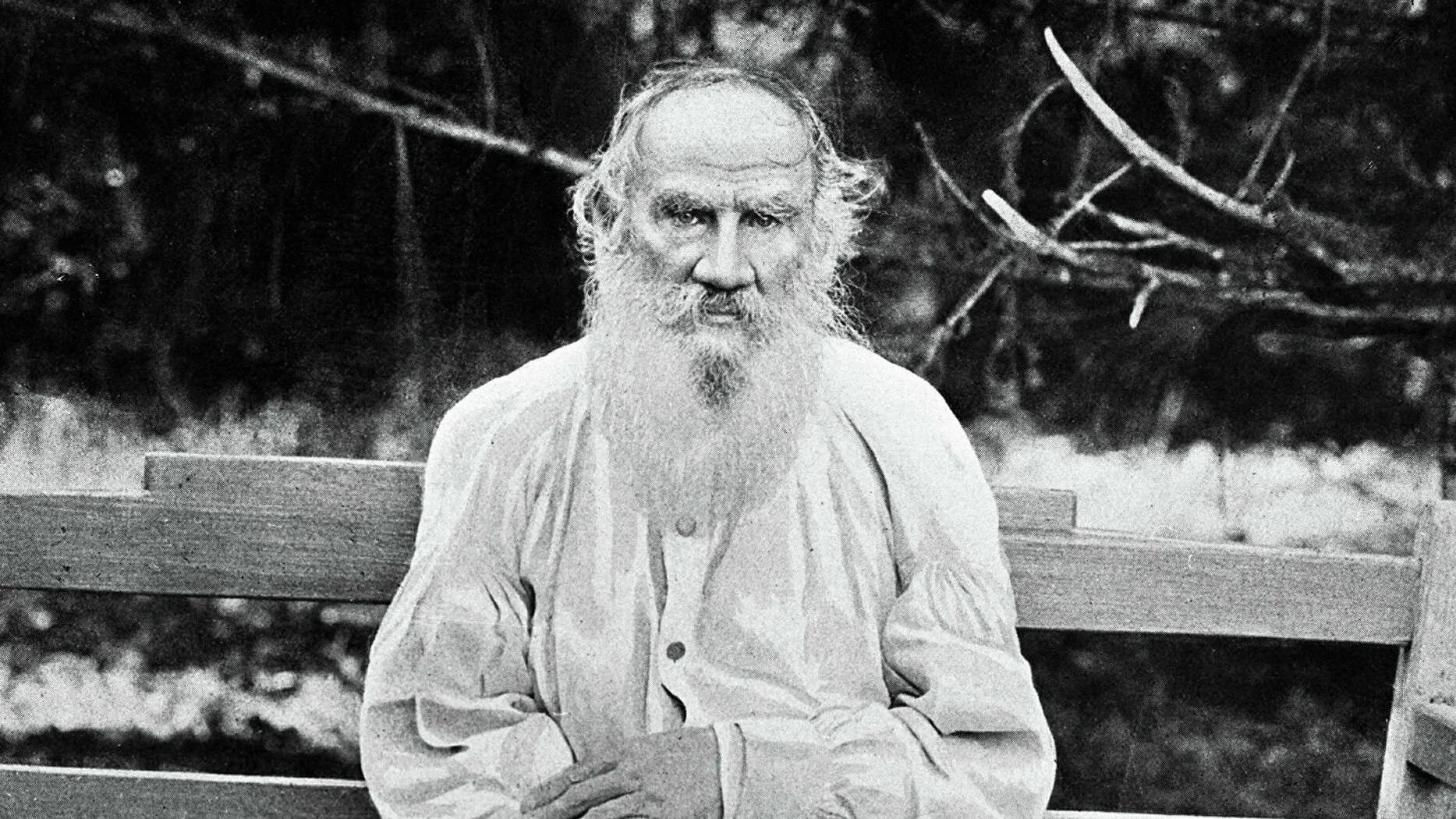
Opening Part Two of his monumental work, Tolstoy directly addresses the forces of nature and circumstance that carry men of action, which lead them to believe, often innocently, that they are acting from their own volition:
“They were moved by fear or vanity, they rejoiced or were indignant, they argued and supposed that they knew what they were doing and did it of their own free will, whereas they were all the involuntary tools of history, working out a process concealed from them but intelligible to us. Such is the inevitable lot of men of action, and the higher they stand in the social hierarchy the less free they are.” — War & Peace, Leo Tolstoy
Closely following the lives of Andrei Bolkonsky, Natasha Rostova, Pierre Bezukhov, and others as they are swept up in an infinitely interconnected web of fate, Tolstoy makes it clear to readers that history is shaped by innumerable and often inexplicable forces of nature—not individuals. Bluntly rejecting the notion that Great Men are the drivers of historical moments, Tolstoy adopts a deterministic position that does not outright dismiss free will, but rather minimizes its role in the grand currents of history. His apple analogy in the epilogue to War and Peace aptly considers the numerous forces that lead to an apple’s fall: gravity, climate, its stalk, its weight, and the desire of a hungry boy standing beneath the tree. Tolstoy concludes: “None of these is the cause... Every action of theirs that seems to them an act of their own free will is, in the historical sense, not free at all, but is bound up with the whole course of history and preordained from all eternity.”
Free will appears prominently in our daily interactions and personal relationships, but not in the defining paths of our lives nor the arc of history. Much like Victor Hugo describing the inevitable causes that cost Napoleon his victory at Waterloo, Tolstoy views history in fatalistic terms and downplays individuality. Grossman sees things differently.
As mentioned earlier, Grossman does not overlook the role of fate and circumstance, but he adamantly suggests that individuals retain meaningful control, stating: “A man may be led by fate, but he can refuse to follow.” This personal agency does not only show up in negation, such as the right to refuse capitulation or murder, but also in the preservation of dignity and heroism. Whether one is a farmer fatefully conscripted to the front like Vavilov, imprisoned in a death camp like Mostovskoy, held in the Lubyanka and pressured to testify like Krymov, or facing severe threats and censorship like Viktor Strum, each individual retains meaningful choice. Grossman defines this choice as freedom, and as long as man enacts this level of control over his actions, he is free.
Unlike Tolstoy, Grossman sees power in individual choice and believes these relatively insignificant decisions carry massive consequences once compounded. It is individuals who form the gestalt and the indeterminable forces of history. The power lies in the people, in their morals, and in their defiance of external pressures.
Is this faith in individuality naive? Is it too idealistic to suggest that an individual’s actions can generate shockwaves within a historical moment, influencing the outcome? Can we even rely on the majority of human beings to make morally bound decisions in situations of life and death? Earlier in Part One of Stalingrad, Mostovskoy and Andreyev go for a walk and discuss the fast-approaching war. Mostovskoy remarks on the difference between the German government and the German people, expressing sympathy and placing more hope in the ordinary citizen. Andreyev rebukes his position with cynicism, arguing: “Your thinking’s like the teachings of Christ. All very beautiful—but nobody actually lives by them. They just soak the whole earth with blood.” This level of cynicism and nihilism is hard to oppose when civilization’s track record shows cyclical war and human suffering dealt out at some point by practically every nation. Despite this, Grossman’s approach of upholding faith in the everyman and valuing the impact of individual free will appears to be the only feasible path toward a more humane future.
Let Us Not Play With War
“War is not a polite recreation but the vilest thing in life, and we ought to understand that and not play at war. Our attitude towards the fearful necessity of war ought to be stern and serious. It boils down to this: we should have done with humbug, and let war be war and not a game. Otherwise, war is a favorite pastime of the idle and frivolous ... there is no profession held in higher esteem than the military.” — War & Peace, Leo Tolstoy
In the past 157 years since the full publication of War and Peace in 1869, Russia and the Soviet Union have been engaged in military conflict for well over 100 of those years—both defensively and offensively. Even more disheartening is the fact that this perpetual state of warfare is not exclusive to Russia; a comparable willingness toward violence can also be seen in U.S. foreign policy over the last century. Regardless of the causes of war or the countries involved, these murderous conflicts are often enshrouded in propaganda and coercive rhetoric that subvert truth.
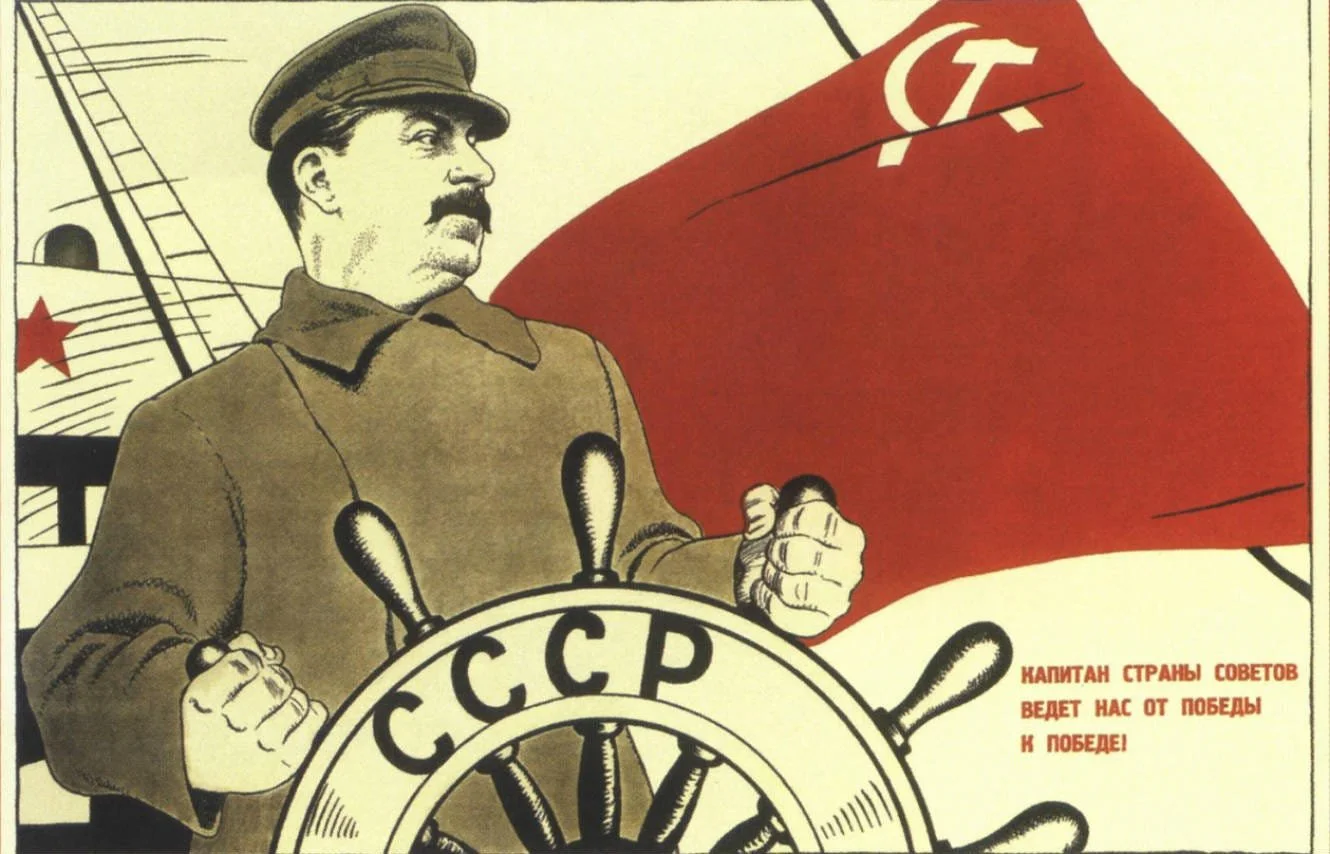
In Stalingrad, several characters babble out all sorts of socialist slogans and lofty beliefs about the righteousness of the cause—let us not forget the forced renaming of the novel to For a Just Cause. Debating the threat of war in their cramped, frenzied apartment, Marusya argues with Zhenya, spouting socialist-coated ideas about truth: “How many times do I have to tell you that there are two truths? There’s the truth of the reality forced on us by the accursed past. And there’s the truth of the reality that will defeat that past. It’s this second truth, the truth of the future, that I want to live by.” In an instant, Sofya Osipovna fiercely rebukes such indoctrinated thinking:
“You're wrong. I can tell you as a surgeon that there is one truth, not two. When I cut someone's leg off, I don't know two truths. If we start pretending there are two truths, we're in trouble. And in war too—above all, when things are as bad as they are today—there is only one truth. It's a bitter truth, but it's a truth that can save us. If the Germans enter Stalingrad, you'll learn that if you chase after two truths, you won't catch either. It'll be the end of you.” — Stalingrad, Vasily Grossman
Today, we live in an age where truth and our perception of reality are constantly under threat. Through the dissemination of state-sponsored information, the control of social media platforms, and the frequent invasion of personal data, governments and institutions have gradually devalued the conception of truth. Historically, this phenomenon is not new, but the ease and speed of this manipulation are.
Grossman depicts an inversely proportional relationship between technological advancement and ethical erosion. Totalitarianism may scar entire generations and ruthlessly churn body after body through the meat grinder of war, but Grossman asserts that its implications set civilization back thousands of years, or perhaps even beyond a point of recovery:
"Look! What kind of faith in the future do you see in these ruins? Technology may be progressing, but what about ethics? What about morality and humanity? They're in some kind of Stone Age. Fascism is a new savagery. It's taken us back 50,000 years." — Stalingrad, Vasily Grossman
Where To From Here
Vasily Grossman remains one of the greatest unsung Russian novelists of the twentieth century. Translating the most sickening acts of war and fascism through both riveting fiction and nonfiction, he rises above many of his contemporaries for his willingness to confront the moral ambiguity at the heart of Soviet society, but also within civilization as a whole. Much like the demands for political consciousness in the Soviet Union, Grossman calls for an omnipresent moral consciousness in society—a heightened awareness of our ethical responsibility to ourselves and to others. In his works, he reminds us of the real consequences and real lives impacted by the ostensibly trivial actions of ordinary individuals. The freedom to become either a courageous force for good or a monstrous contributor to evil lies in our hands. Only we can decide.
