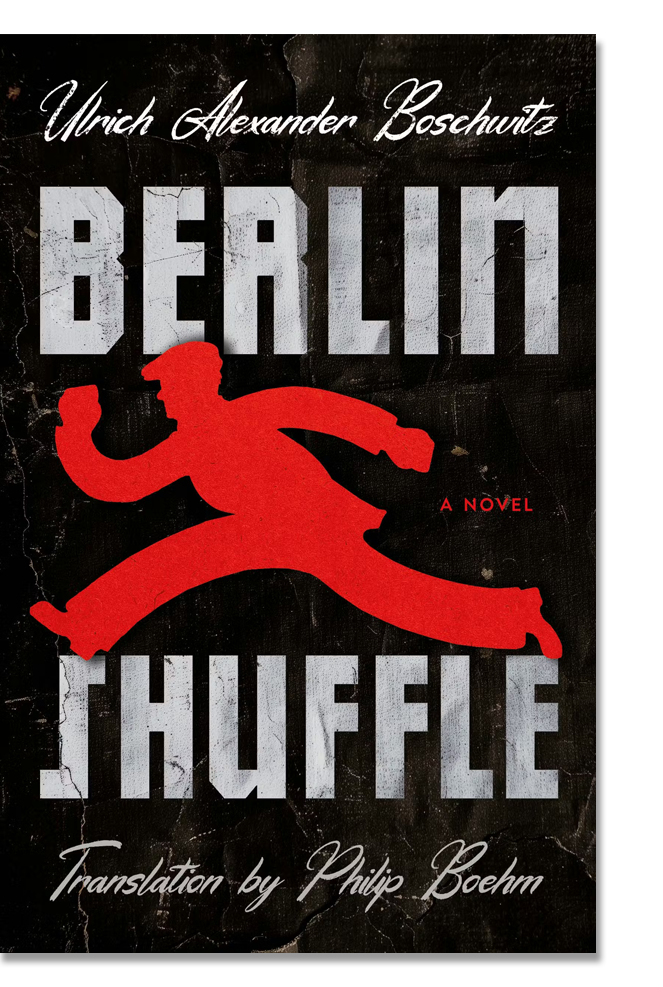
Reviewed:
by Ulrich Alexander Boschwitz
Translated by Philip Boehm
Metropolitan Books, 256 pp., $26.99 (hardcover)
Publication Date: 12/9/25
Nearly lost to the rubble of unprecedented war and carnage, Ulrich Alexander Boschwitz’s dark comedy Berlin Shuffle brilliantly captures the hedonistic hysteria and fateful free-for-all of the Weimar Republic. Chapter by chapter, Boschwitz threads a narrative needle through the imbricated lives of beggars, charlatans, and eccentric elites, revealing a Berlin both frenetic and doomed. Philip Boehm’s superb translation restores this forgotten masterpiece with clarity, vitality, and moral sharpness.
Along derelict streets teeming with prostitutes and petty criminals, readers follow a triad of panhandlers—Grissmann, a temperamental misfit; Tönnchen, a barrel-sized buffoon; and Fundholz, their clumsily dressed leader. Carried along by the inexorable “wheels of life,” the men drift through the streets in search of handouts, while the tragic events of their helpless past gradually come to light. Moving through riotous episodes and finely drawn micro-portraits, Boschwitz vividly captures the mania and bustling, seductive atmosphere of Weimar Berlin.
Come evening, the entire delirious cast convenes at the Jolly Huntsman pub, which also serves as the meeting place for an underground criminal network called a Ringvereine. Led by pimps, gamblers, and other felonious figures, these secretive organizations organized themselves, established internal rules, protected their interests, and imposed taxes. In the novel, this exuberant pub serves as a convenient front for the desperate criminals, but also as a delectable escape for both the indulgent and the destitute. Inside is a blind veteran enraged with spite, a delusional widow waiting for her deceased husband to return, and a gold-digging darling keeping her washed-up father financially afloat.
Beyond the stomach-cramping humor and cultural caricatures, Boschwitz’s genius shines in his political commentary surrounding the foolishness of war and prejudice. He keenly outlines the ways in which political leaders and modern-day prophets exploit the impatience of the masses: “People have long believed in better times to come. […] So modern prophets have sped up the clock: According to them an earthly paradise is within sight.”
In the exhilarating ending, Boschwitz pits two characters against each other in a heated, violent exchange. The standoff not only analogizes the senselessness of war but also strikes at the malignance of warmongers and bystanders who shamelessly encourage mass slaughter:
“Just as two nations suddenly attack each other for no good reason and let themselves be drawn into a war that only serves the interests of people unknown and unnamed, so, too, there are moments when people give in to their destructive.”
Economical and witty from start to finish, Berlin Shuffle is a timeless classic that portrays a frantic era while revealing enduring human flaws. Torpedoed and sunk along with his remaining works in 1942, Ulrich Alexander Boschwitz’s surviving novels testify that humanity lost a promising literary titan in the making.
